With 40 years of multi-color application experience passed down and accumulated, we have been constantly upgrading and evolving, never stopping and never reaching our destination.

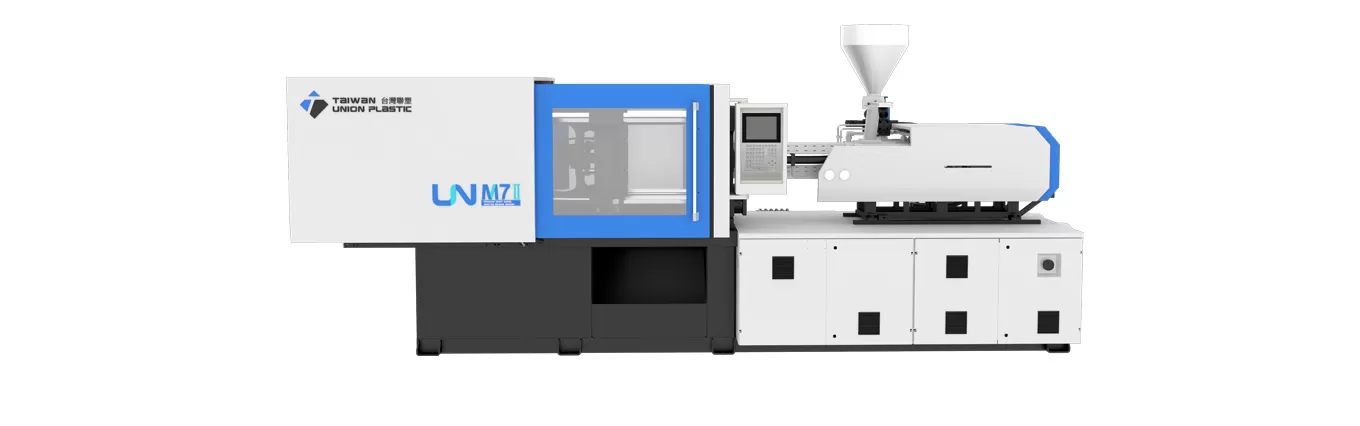 UN
Servo Hydraulic Injection Molding Machine
UN
Servo Hydraulic Injection Molding Machine
In today's rapidly iterating innovation landscape, speed and the authenticity of prototypes are key to success. Traditional injection molding often bottlenecks functional prototyping into a time-consuming and costly phase. The Desktop Injection Molding Machine (DIMM) is revolutionizing this process by offering a direct, cost-effective solution.

The most significant role of the DIMM is accelerating the design-test-refine loop. It effectively replaces the traditional process of waiting weeks for external suppliers to produce functional prototypes, enabling teams to complete the cycle in hours:
Final Material Validation: The DIMM allows designers to mold parts using the exact same engineering thermoplastics (like ABS, PC, Nylon) that will be used in the final product. This ensures that the prototype has the mechanical and thermal properties consistent with mass-produced parts when tested for stress, heat, or chemical resistance—an advantage that 3D printing cannot offer.
Rapid Iteration and DFM: Engineers can quickly create inexpensive molds (e.g., from aluminum or 3D-printed high-temp resins) and immediately test design changes on the workbench. This instant feedback loop enables critical Design for Manufacturability (DFM) verification before committing to expensive, large-scale tooling.
For specialty or niche markets that do not require millions of units, the DIMM offers unique commercial value.
Bridge Production: While waiting for mass production molds to be completed, the DIMM can be used to produce small quantities of parts (often tens to hundreds of units) to satisfy early market demand or conduct customer testing. This helps bridge the gap between prototyping and full-scale production.
Custom Components and Insert Molding: Due to the easy accessibility of the DIMM's mold area, it is perfectly suited for complex operations requiring manual intervention, such as Insert Molding (molding metal or other components into plastic) or producing small batches of customized medical devices and electronic housings.
High-Value Parts: For parts made with expensive or exotic materials, the DIMM's small shot size and low scrap rate significantly reduce material costs, making it ideal for high-value, low-volume components.
Beyond commercial use, the DIMM is transforming engineering education and materials research.
Hands-On Learning: They provide students with a safe, controlled environment to understand the complex principles of injection molding—from material science and mold design to process parameter control. This practical experience is crucial for training the next generation of manufacturing engineers.
Materials Science Research: Researchers can quickly mold test samples with small quantities of new formulations or experimental polymers without tying up large, expensive industrial machines. This dramatically accelerates the development and verification cycle for new plastics and composite materials.