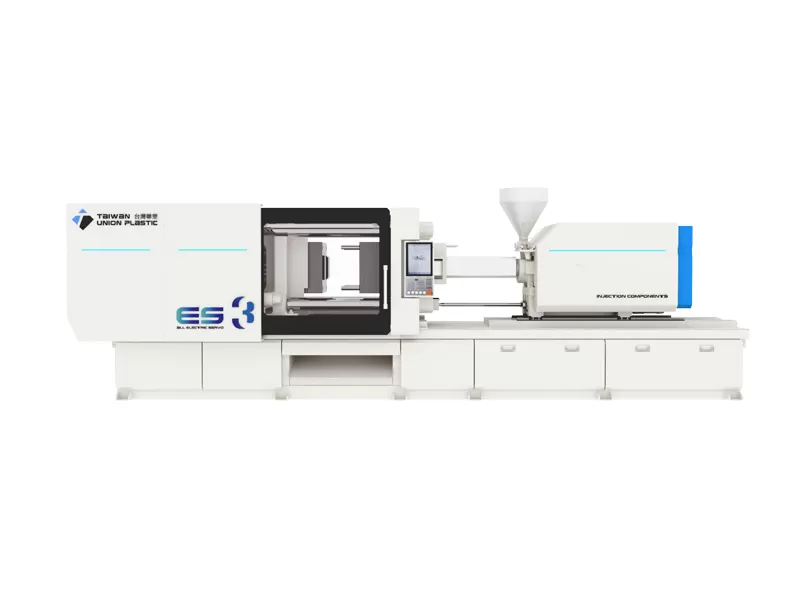
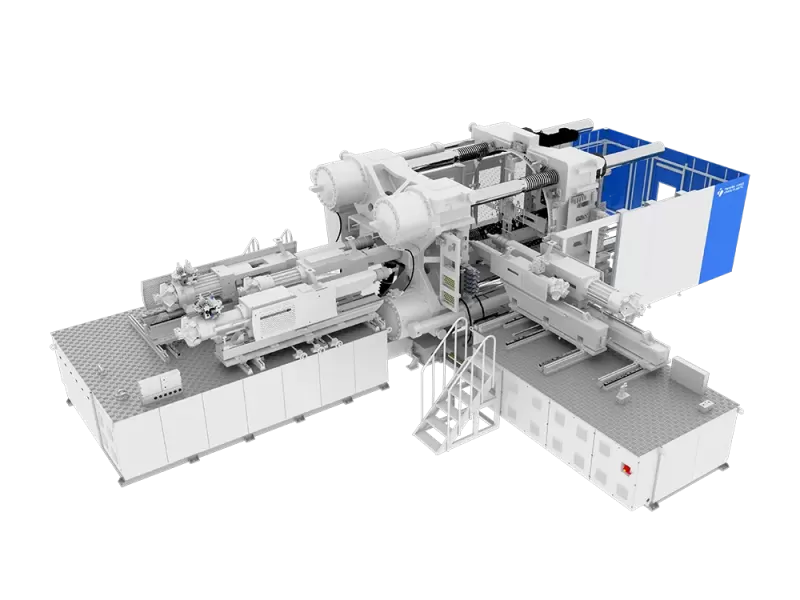
All-electric injection molding machines feature high precision, high efficiency, energy conservation and environmental protection, high level of intelligence, and wide range of application scenarios.

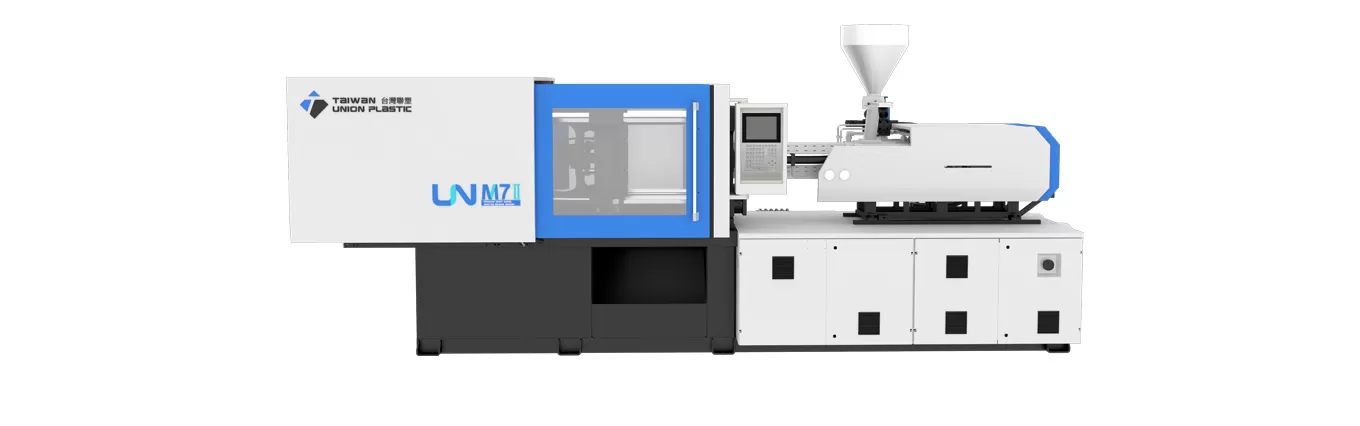 UN
Servo Hydraulic Injection Molding Machine
UN
Servo Hydraulic Injection Molding Machine
Choosing between an all-electric and a hydraulic injection molding machine is not a simple question of which technology is newer. The correct choice depends on the molded part, resin, mold size, required repeatability, cycle profile, production environment, automation plan, available utilities, maintenance capability, and expected operating hours. A machine that performs exceptionally well in a medical clean-production cell may be unnecessarily expensive for a heavy-duty pallet application, while a conventional hydraulic platform selected only for a lower initial price may create avoidable energy, heat, oil-management, and precision costs in a high-volume precision program.
This guide provides a practical decision framework for overseas manufacturers, plant managers, engineers, and procurement teams. It explains how each drive system works, where the differences matter, how to compare total cost instead of purchase price alone, and what production data should be sent to a machine supplier before a quotation is prepared. Taiwan Union Plastic (TUP) manufactures hydraulic, all-electric, hybrid, multi-component, two-platen, and specialized injection molding platforms, allowing a selection to be made around the production task rather than around one preferred drive technology.
An all-electric injection molding machine is an injection molding platform in which major machine movements are driven by electric servo motors rather than by a central hydraulic power unit. Separate electric drives typically control injection, screw rotation, clamping, mold opening and closing, ejection, and other coordinated movements, although the exact architecture varies by model and manufacturer.
The practical advantage of independent electric drives is control. Each axis can be commanded with precise position, speed, acceleration, and torque profiles. Because the machine does not need to keep a hydraulic pump running for every movement, energy is consumed closer to the moment when mechanical work is required. Electric actuation can also reduce hydraulic heat load and eliminate many oil-related production concerns.
However, “all-electric” should not be interpreted as automatically superior for every process. The machine still needs correct screw geometry, sufficient injection pressure and rate, stable barrel heating, adequate clamping force, mold protection, rigid mechanical structures, appropriate controller functions, and correctly sized motors. A poorly matched electric machine cannot compensate for an oversized shot, an unsuitable screw, an unstable mold, or an unrealistic cycle target.
For buyers evaluating an electric injection molding machine, the most important questions are not limited to repeatability claims. Ask which axes are electric, how injection velocity is measured, whether simultaneous movements are supported, what peak injection pressure is available, how the machine manages regenerative energy, what clean-production options are available, and how performance is validated with the buyer’s mold and material.

A hydraulic injection molding machine is an injection molding platform that uses pressurized hydraulic oil to create and control major machine movements such as clamping, injection, screw recovery, mold opening, and ejection. Modern servo-hydraulic machines differ significantly from older fixed-pump systems because a servo motor can regulate pump output according to the pressure and flow required by each stage of the cycle.
Hydraulic machines remain widely used because they can deliver high force density, robust performance, flexible machine layouts, and broad mold compatibility. They are especially relevant for large molds, thick parts, high clamp-force applications, products requiring long pressure-holding stages, and plants that value a mature maintenance ecosystem. A well-designed servo-hydraulic system can also reduce unnecessary pump operation and improve response compared with traditional constant-speed hydraulic systems.
TUP’s UN series, for example, is presented with servo-hydraulic drive, a clamping-force range from 90 to 2,900 tons, and screw diameters from 32 to 230 millimeters. These numbers show why a hydraulic injection molding machine can cover a very broad range of molded products, but the final specification still depends on shot size, projected area, cavity pressure, mold dimensions, tie-bar spacing, daylight, opening stroke, plasticizing capacity, and cycle requirements.
Oil does introduce responsibilities. Buyers should evaluate oil temperature control, filtration, seal quality, hose and fitting accessibility, leak prevention, preventive maintenance, contamination control, and the availability of replacement components. In a medical or optical production area, the cleanliness plan may carry more weight than it does in a construction-product plant. In a very large machine, hydraulic power may remain economically and mechanically attractive because of the forces and mold sizes involved.
The core difference between an all-electric and a hydraulic injection molding machine is how mechanical motion and force are generated, controlled, and delivered during the molding cycle. Electric machines use dedicated servo-driven mechanical systems, while hydraulic machines use fluid power generated by pumps and controlled through valves, pressure, and flow circuits.
| Decision Factor | All-Electric Machine | Servo-Hydraulic Machine | Why It Matters |
|---|---|---|---|
| Axis control | Independent servo control for major movements | Pressure and flow control through servo pump and valves | Affects repeatability, response, and simultaneous movements |
| Energy pattern | Power drawn mainly when an axis performs work; regenerative options may recover energy | Servo pump output follows demand, but hydraulic conversion and cooling losses remain | Influences kWh per kilogram and heat load |
| Cleanliness | No central hydraulic oil circuit for main movements | Requires oil management, leak prevention, and filtration | Important in medical, optical, food-contact, and clean production |
| Force density | High performance, but motor and mechanical sizing can increase cost at very large forces | Strong force capability and mature large-machine designs | Important for large molds and high clamp force |
| Noise and heat | Often lower hydraulic noise and lower oil-cooling demand | Depends on pump, hydraulic design, cycle, and cooling system | Affects workplace and utility planning |
| Maintenance focus | Servo motors, drives, ball screws, belts, lubrication, alignment | Pumps, valves, seals, hoses, filters, oil, coolers, plus mechanical systems | Changes spare-parts and technician requirements |
| Typical strength | Precision, cleanliness, repeatability, efficient short cycles | Versatility, force, large molds, robust general-purpose production | Helps match the platform to the product |
The table should be used as a screening tool, not as a final specification. Two machines with the same nominal clamping force can differ substantially in injection speed, pressure, screw design, mold space, platen rigidity, controller functions, energy performance, and lifecycle support. The buyer should compare actual data sheets and trial results under equivalent conditions.
Precision in injection molding means the machine can execute commanded positions, speeds, pressures, and transitions consistently enough to keep critical part characteristics within the approved process window. Repeatability is therefore a combined result of the drive system, control algorithm, sensors, mechanical rigidity, screw and non-return valve condition, material preparation, mold temperature, cavity balance, and process setup.
All-electric machines are often selected for applications in which small deviations produce measurable functional or cosmetic problems. Examples include medical components, connectors, electronic housings, optical parts, precision gears, thin-wall items, and multi-cavity components with narrow weight tolerances. Independent servo axes can provide stable position control and repeatable movement profiles, while electric screw recovery can support consistent plasticizing when correctly sized.
Hydraulic machines can also produce high-precision parts. Modern servo pumps, closed-loop control, accurate transducers, improved valve technology, and rigid machine structures have significantly improved hydraulic performance. The question is not whether a hydraulic machine can be precise; it is whether the selected machine can maintain the required process window at the intended speed, ambient conditions, operating hours, and maintenance level.
TUP states on its products overview that its injection molding platforms can achieve product-quality repeatability of 0.1% under the company’s stated conditions. A buyer should request the definition behind any repeatability figure: whether it refers to shot weight, position, pressure, or another measure; what resin and mold were used; how many cycles were measured; and whether the result applies to the quoted configuration. A number without its test method should not be treated as a universal production guarantee.
Injection molding energy consumption is best compared as specific energy use, commonly expressed as kilowatt-hours per kilogram of processed material, under a defined mold, resin, cycle, and production condition. Comparing only installed motor power or a general statement such as “energy saving” can be misleading because actual consumption depends on the work performed during each cycle.
An all-electric machine can reduce energy use in applications with frequent acceleration, short cycles, long idle periods, and precise coordinated movements because power is closely matched to axis demand. A servo-hydraulic machine can also perform efficiently because the pump does not need to run at full output continuously. The difference narrows or widens depending on pressure-holding time, cooling time, shot size utilization, screw recovery load, simultaneous movement, auxiliary equipment, and machine sizing.
EUROMAP 60.1 provides an industry method for describing machine-related energy efficiency and emphasizes that only machines of similar size should be compared. That principle is essential. A 350-ton machine molding a small part at low shot utilization may show poor specific energy performance even if its drive technology is efficient. Oversizing increases moving mass, heating requirements, and idle losses.
A practical factory comparison should use a power meter at the complete molding cell and record at least the machine, mold-temperature controller, chiller allocation, dryer, material handling, robot, and compressed-air demand. For example, assume Cell A consumes 42 kW on average and produces 48 kilograms of accepted parts per hour. Its cell-level specific energy is 42 ÷ 48 = 0.875 kWh/kg. If Cell B consumes 36 kW and produces 45 kilograms per hour, the result is 0.800 kWh/kg. Cell B is more energy-efficient per kilogram in this test even though its hourly output is lower.
The same test must also record scrap. If Cell B produces 45 kilograms of parts but only 42 kilograms are accepted, its effective energy per accepted kilogram becomes 36 ÷ 42 = 0.857 kWh/kg. This illustrates why process stability and yield must be included in energy comparisons.
Cycle-time performance is the ability of the molding cell to complete filling, packing, cooling, plasticizing, mold movement, ejection, and part handling in the shortest stable cycle that still meets quality and safety requirements. The drive system matters, but mold cooling, part geometry, material, robot motion, and auxiliary equipment often control the final cycle.
All-electric machines can perform multiple movements with separate drives, allowing operations such as screw recovery, mold movement, and ejection to be coordinated where the process and safety logic permit. Fast response can be beneficial for thin-wall molding and multi-cavity production. Yet the machine must have adequate injection rate, not merely high injection speed. Injection rate depends on screw cross-sectional area and velocity, and the mold must be designed to accept the required flow without excessive pressure, shear, or imbalance.
Servo-hydraulic machines can also support simultaneous or overlapping movements through suitable pump capacity, accumulators, valve architecture, and control functions. In high-speed packaging, a purpose-built hydraulic or hybrid machine may outperform a general-purpose electric machine because the complete system is designed around injection rate, clamp dynamics, pressure availability, and plasticizing throughput.
TUP reports on its products page that mold opening and closing speed can be increased by 20% and injection response can be below 40 milliseconds for the stated machine configurations. These figures can be meaningful when reducing non-cooling time, but buyers should ask for the original baseline, machine model, stroke, mold weight, and measurement method. The best evidence is a trial with the production mold or a technically comparable mold.
Maintenance cost is the total labor, parts, fluids, inspections, calibration, cleaning, and lost production associated with keeping the machine within its approved performance condition. A lower routine-maintenance burden is valuable only if the plant can also support the machine’s electronic and mechanical service requirements.
All-electric maintenance usually focuses on lubrication systems, ball screws or other transmission components, belts, bearings, servo motors, drives, cooling fans, encoders, cables, alignment, and controller backups. The machine may avoid hydraulic-oil changes, leaks, filter replacement, and oil-cooler maintenance, but high-value electronic parts and specialized service capability should be considered. Buyers should ask about drive availability, software backups, remote diagnosis, expected component life, and local service coverage.
Hydraulic maintenance includes oil condition, filters, pumps, valves, seals, hoses, fittings, accumulators where fitted, coolers, temperature stability, and contamination prevention. Oil analysis can identify viscosity change, water contamination, particle load, and wear debris before a failure occurs. A disciplined hydraulic program can deliver long machine life, while neglected oil and cooling systems can cause valve sticking, leakage, unstable response, and premature component wear.
Downtime cost should be estimated separately from maintenance spending. If a production line generates a contribution margin of $600 per operating hour and an unplanned failure stops the cell for 18 hours, the direct lost contribution is $10,800 before overtime, expedited shipping, scrap, and customer penalties. This is why spare-parts strategy, remote support, documentation, training, and diagnostic capability can matter more than a small difference in annual routine-maintenance cost.
Clean production is a controlled manufacturing approach that limits particles, oil, dust, contamination, uncontrolled lubricants, and other sources that can affect product quality or regulatory requirements. All-electric machines are often preferred in clean environments because the main movements do not rely on a central hydraulic oil circuit.
Medical, laboratory, optical, food-contact, and high-gloss parts may benefit from reduced oil exposure and lower hydraulic heat. However, a clean machine alone does not create a clean process. The cell also requires appropriate lubrication choices, covered mechanical areas, clean material handling, mold maintenance, robot and conveyor design, controlled airflow, cleaning procedures, operator discipline, and documented contamination controls.
Hydraulic machines can be used in controlled production when correctly configured and maintained. Measures may include high-quality seals, leak-detection routines, closed lubrication, drip containment, protective covers, scheduled hose replacement, oil-temperature stability, and separation of hydraulic service activities from clean operations. The buyer should define the cleanliness requirement in the user requirement specification rather than assume that a broad industry label is sufficient.
An all-electric injection molding machine is usually the stronger candidate when the business case is driven by precise repeatability, clean production, low hydraulic heat, efficient short-cycle operation, and independent axis control. The final decision should still be validated with the mold, material, cycle, and local service plan.
Medical and laboratory disposables: Multi-cavity pipette tips, syringe components, diagnostic housings, connectors, and other parts where repeatability, documentation, and cleanliness are important.
Electronics and connectors: Small parts with narrow dimensions, delicate features, insert requirements, or high cavity counts.
Optical and high-gloss products: Applications sensitive to process variation, contamination, and surface defects.
Precision technical parts: Gears, mechanisms, fluid-control components, and assemblies requiring stable shot control.
High operating hours with expensive electricity: Programs in which energy savings can materially influence lifecycle cost.
Plants with limited cooling capacity: Lower hydraulic heat load may reduce demand on oil cooling, although total cell cooling still depends on the mold and process.
The buyer should not select an electric machine based only on an industry label. A medical housing with a large shot, long pressure-holding stage, or special material may require a different configuration from a small multi-cavity diagnostic component. Send actual mold and production data before finalizing the machine.
A hydraulic injection molding machine is usually the stronger candidate when the application requires broad versatility, high force, large molds, mature heavy-duty construction, or an attractive capital-to-capability ratio. Servo-hydraulic technology can also provide substantial efficiency and control improvements compared with older fixed-pump systems.
Large automotive and appliance parts: Bumpers, panels, housings, structural parts, and components requiring large mold capacity.
Logistics and construction products: Pallets, crates, fittings, large containers, and thick or heavy parts.
Long pressure-holding processes: Parts where sustained hydraulic force and robust thermal management are valuable.
Frequent mold diversity: General-purpose plants running a broad range of products and resin types.
Markets with strong hydraulic service capability: Local technicians and readily available hydraulic components can reduce lifecycle risk.
Projects with constrained initial capital: A servo-hydraulic platform may provide the required output at a lower initial investment, depending on size and configuration.
For very large machines, two-platen hydraulic designs can provide generous mold space, long opening stroke, and high clamping force without an excessively long conventional clamping structure. TUP’s HS two-platen series is listed from 450 to 6,600 tons, illustrating the scale at which hydraulic architecture remains strategically important.
A hybrid injection molding machine combines electric and hydraulic technologies so that selected movements use the drive system best suited to their performance and cost requirements. A common arrangement uses electric injection and plasticizing with hydraulic clamping, although other combinations are possible.
Hybrid platforms are useful when the buyer wants precise electric injection but also needs large mold capacity or strong hydraulic clamping. They can serve medium and large precision products, multi-component applications, automotive parts, and production cells where a fully electric architecture would be technically possible but not economically optimal.
The weakness of the word “hybrid” is that it does not describe the actual configuration. Buyers should ask which axes are electric, which are hydraulic, whether movements can overlap, what oil system remains, how energy is measured, and how maintenance responsibilities are divided. A hybrid machine should be evaluated as a specific architecture rather than as an average between two categories.
Total cost of ownership is the combined capital and operating cost of the machine and production cell over the planned ownership period, including purchase, financing, installation, energy, cooling, maintenance, parts, labor, scrap, downtime, training, and residual value. TCO is more useful than purchase price because drive-system differences often appear after the machine begins production.
Use the following simplified five-year calculation:
Machine and options purchase price.
Freight, duties, installation, foundation, utilities, commissioning, and training.
Annual operating hours multiplied by measured average cell power and electricity rate.
Annual preventive maintenance, consumables, oil where applicable, spare parts, and service labor.
Expected scrap and rework cost based on accepted production, not gross output.
Expected downtime cost using a realistic contribution margin per lost production hour.
Financing cost and residual value.
Consider an illustrative example, not a quotation. Machine E costs $40,000 more than Machine H. Both run 6,000 hours per year. Machine E uses 8 kW less on average, and electricity costs $0.12 per kWh. The annual energy difference is 8 × 6,000 × $0.12 = $5,760. If the electric platform also saves $2,000 per year in cooling and routine fluid-related maintenance, the simple annual operating benefit is $7,760. The purchase-price difference would be recovered in approximately 5.15 years before financing, scrap, downtime, and residual value are considered.
If the same plant operates only 2,500 hours per year, the energy benefit becomes 8 × 2,500 × $0.12 = $2,400. With the same $2,000 additional annual savings, the payback becomes about 9.1 years. This is why operating hours and local electricity rates can reverse the decision.
Now add yield. If the electric machine reduces scrap by 0.5 percentage point on a program processing 1,200 tons per year and the fully burdened material value is $2.40 per kilogram, the avoided material cost is 1,200,000 × 0.005 × $2.40 = $14,400 per year. Even a small yield improvement can therefore outweigh the energy difference. The buyer must validate that the expected yield improvement is realistic for the actual process.
Correct machine selection is the process of matching the machine’s clamping, injection, plasticizing, mold-space, speed, control, utility, and automation capabilities to a defined production requirement. The supplier cannot perform this accurately from part weight or clamping force alone.
Prepare the following information before requesting a quotation:
Part drawing, 3D data, dimensions, projected area, wall thickness, and critical tolerances.
Resin grade, fillers, flame-retardant system, color, moisture sensitivity, and expected regrind percentage.
Part weight, runner weight, cavity count, and total shot weight.
Mold dimensions, weight, thickness, tie-bar requirements, opening stroke, ejector stroke, and hot-runner information.
Expected cavity pressure or available mold-flow analysis.
Target cycle time, annual production, operating hours, accepted scrap target, and changeover frequency.
Required injection speed, injection pressure, screw recovery time, and plasticizing rate.
Automation scope, robot interface, insert loading, IML, inspection, packing, and downstream equipment.
Local voltage, frequency, cooling-water conditions, compressed air, ambient temperature, and floor limitations.
Quality, clean-production, traceability, safety, language, certification, and documentation requirements.
After reviewing these inputs, the supplier should explain the machine margin. For example, shot utilization should not be so low that residence time becomes unstable, nor so high that the process operates at the limit. Clamp force should include a justified safety factor, not an arbitrary oversized margin. Mold dimensions and opening requirements must fit the actual platen, tie bars, daylight, and stroke. The injection molding machine types page can then be used to compare electric, hydraulic, hybrid, multi-component, and specialized configurations within one product system.
Factory acceptance testing is a documented pre-shipment verification that the machine and agreed production cell meet specified mechanical, electrical, safety, process, and output requirements. FAT should use measurable acceptance criteria rather than visual approval alone.
A useful FAT plan includes machine identity and configuration, safety interlocks, emergency stops, guard functions, lubrication, temperature control, injection and clamping calibration, dry-cycle operation, mold installation, resin preparation, start-up procedure, stable production window, cycle time, part weight, dimensional results, reject rate, energy measurement, alarm history, documentation, spare parts, and operator training.
For an electric machine, check servo alarms, axis repeatability, drive temperatures, regeneration, ball-screw lubrication, and simultaneous movement behavior. For a hydraulic machine, check oil temperature, pressure stability, leakage, filter indicators, pump response, valve operation, and cooling performance. Both machines require verification of mold protection, nozzle alignment, screw recovery, injection transfer, back pressure, ejection, controller data storage, and interfaces to robots or auxiliaries.
Machine-selection mistakes occur when buyers compare labels or headline specifications without connecting them to the actual production process. These errors can increase cost even when the machine itself is well manufactured.
Comparing only purchase price: Ignores energy, cooling, scrap, downtime, support, and financing.
Assuming all-electric always means lower total cost: Low annual hours, very large forces, or unsuitable service conditions may weaken the business case.
Assuming hydraulic means inaccurate: Modern servo-hydraulic systems can provide stable, precise production when correctly specified and maintained.
Oversizing clamping force: Increases capital, energy, floor space, and moving mass without improving part quality.
Ignoring shot utilization: Excessively small shots in a large barrel can increase residence time and material degradation.
Using installed power as energy consumption: Nameplate power is not the same as measured average kW or kWh/kg.
Accepting a repeatability percentage without a test method: The measurement definition and process conditions must be known.
Failing to include auxiliaries: Dryers, chillers, robots, compressors, and mold-temperature units can materially affect cell energy.
Ignoring service capability: A technically excellent machine can become expensive if critical parts, software, or trained support are unavailable.
Taiwan Union Plastic supports drive-system selection by offering multiple machine architectures and matching them to part, mold, process, output, and factory requirements. This approach is important because a supplier offering only one platform may naturally frame every application around that platform.
TUP’s product range includes servo-hydraulic, all-electric, hybrid, multi-component, two-platen, high-speed thin-wall, PVC fitting, pallet, PET preform, Bakelite, barrel, and other customized systems. The company states that its overall clamping-force coverage extends from approximately 90 to 6,600 tons. That breadth allows an engineering discussion to begin with the molded product and production objective.
For a useful recommendation, buyers should provide complete application data and request a written selection explanation. The proposal should identify the recommended series, clamping and injection unit, screw, platen and mold-space checks, cycle assumptions, automation interfaces, energy-measurement method, acceptance plan, training, spare parts, and after-sales arrangement. A quotation without these technical assumptions is difficult to compare fairly.
This FAQ section answers common buyer and engineering questions.
No. All-electric machines often provide strong position and movement repeatability, but final part accuracy also depends on the mold, material, temperature control, screw and check-ring condition, cavity balance, sensors, process setup, and mechanical rigidity. Compare trial data and the definition of repeatability rather than relying on the drive label alone.
The saving varies widely with machine size, cycle, pressure-holding time, shot utilization, production hours, and the hydraulic baseline. Measure average cell kW and kWh per accepted kilogram under equivalent conditions. A percentage stated without the compared machine, mold, resin, cycle, and auxiliary load should be treated only as a preliminary indication.
Yes. Servo-hydraulic machines with stable oil temperature, closed-loop control, accurate sensors, rigid structures, and disciplined maintenance can produce precision parts. For extremely narrow process windows, clean production, or fast independent-axis control, an all-electric or hybrid platform may provide additional advantages.
Large automotive parts frequently use hydraulic or hybrid two-platen machines because they provide high clamping force, generous mold space, and strong large-mold capability. The final choice depends on part area, cavity pressure, mold dimensions, surface requirements, material, cycle time, and whether electric injection is needed for precision or process control.
Provide the part and mold data, resin, shot weight, cavity count, cycle target, annual output, automation scope, utilities, quality requirements, certifications, delivery terms, installation, training, spare parts, and acceptance tests. Two quotations are not comparable when one excludes auxiliaries, commissioning, options, or the injection unit required by the application.
A new factory should create an application matrix rather than choose one technology for every product. Use electric platforms for precision and clean applications, hydraulic or two-platen platforms for large and force-intensive parts, and hybrid systems where electric injection and hydraulic clamping provide the best technical and financial balance.
This conclusion summarizes the recommended decision and implementation approach.
The all-electric vs hydraulic injection molding machine decision should be based on production economics and process evidence, not on a universal ranking of technologies. All-electric machines are strong candidates for precise, clean, highly repeatable, and energy-sensitive production. Servo-hydraulic machines remain highly competitive for versatile manufacturing, large molds, high forces, and applications where a robust capital-to-capability ratio is important. Hybrid machines can bridge these requirements when selected around a specific architecture.
The most reliable buying process is to define the part, mold, resin, cycle, output, factory conditions, quality targets, and acceptance tests before comparing quotations. Taiwan Union Plastic can evaluate these inputs across electric, hydraulic, hybrid, and specialized platforms and recommend a configuration with documented assumptions. That makes the final decision easier to defend technically and financially.
These external references support the technical guidance above.