The cost of an injection molding machine cannot be answered accurately with one price range because the machine is only one part of a production system. Clamping force, injection unit, drive technology, mold dimensions, screw design, automation, controls, safety requirements, certifications, destination, installation, and acceptance testing can change the final investment substantially. Two machines described as “500-ton injection molding machines” may have different mold space, shot capacity, injection rate, pressure, energy performance, controller capability, component brands, and service scope.
For an overseas buyer, the more useful question is: what will it cost to install, validate, operate, maintain, and support a molding cell that produces the required number of accepted parts? This guide explains the main price drivers, shows how to build a total-cost model, identifies hidden quotation differences, and provides a practical request-for-quotation checklist. All financial examples are illustrative planning calculations, not Taiwan Union Plastic quotations.
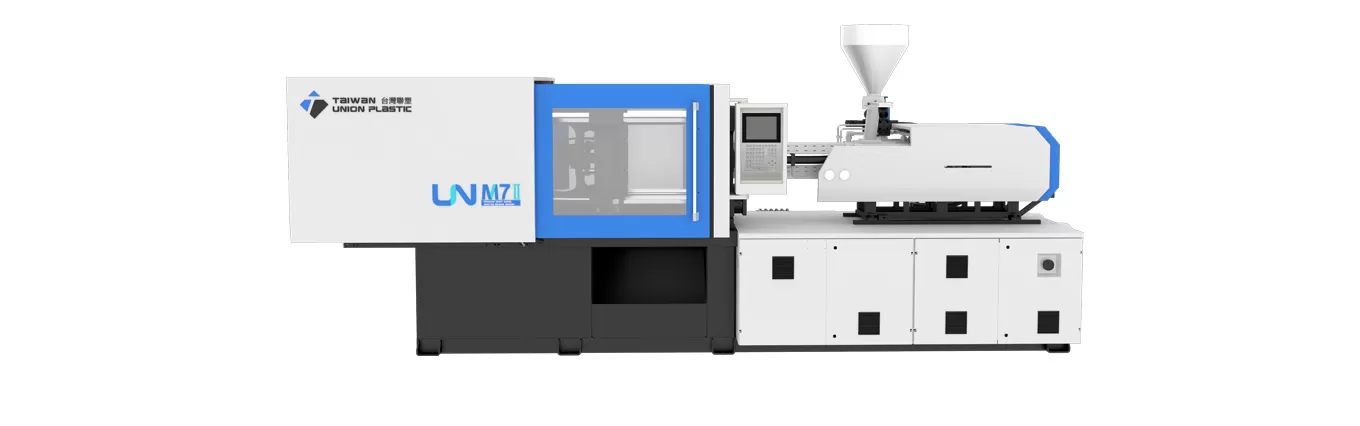
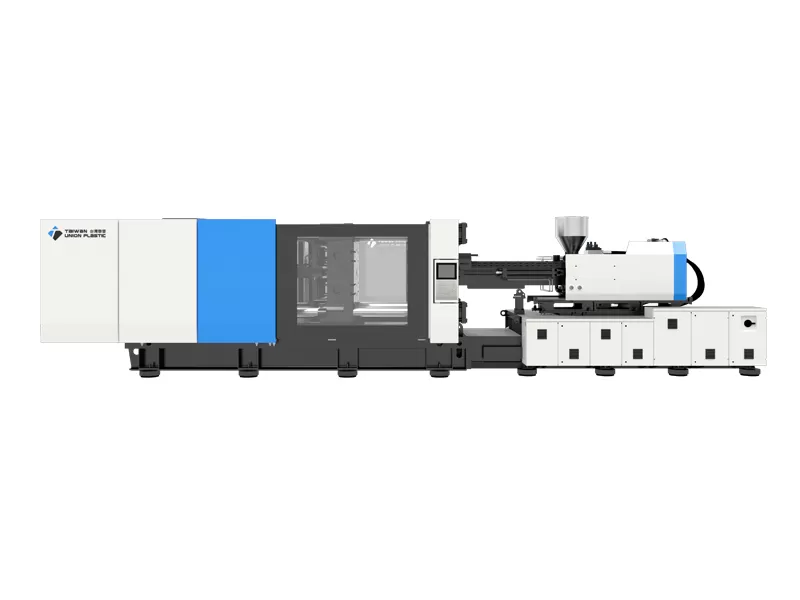
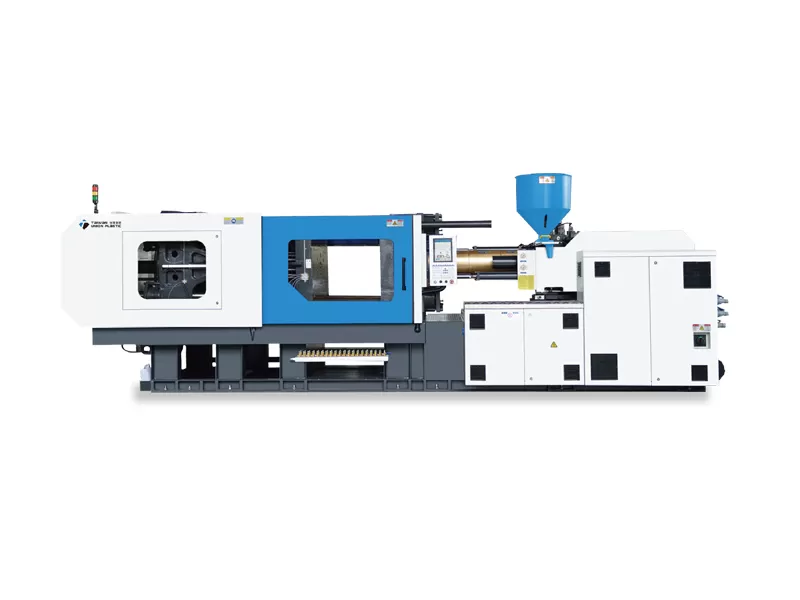
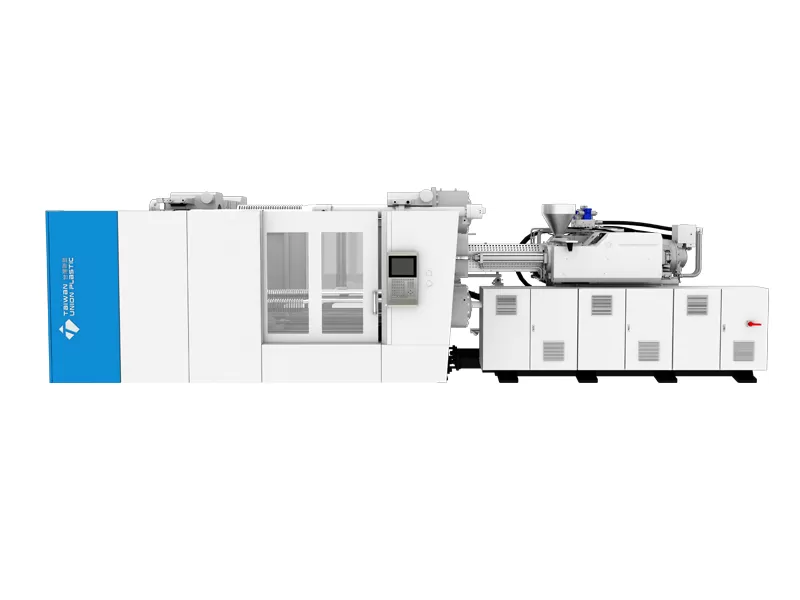
Taiwan Union Plastic (TUP) offers injection molding equipment from approximately 90 to 6,600 tons across servo-hydraulic, all-electric, hybrid, multi-component, two-platen, and specialized platforms. This range illustrates why price depends on the application: a compact precision machine and a large two-platen multi-color system are both injection molding machines, but they are different capital projects.
What Does Injection Molding Machine Cost Include?
Injection molding machine cost is the total investment required to purchase the correctly configured machine and make it capable of producing an approved part at the buyer’s factory. A complete budget may include the base machine, options, mold, auxiliaries, automation, freight, duties, installation, utilities, commissioning, testing, training, spare parts, and financing.
The machine quotation may cover only the press itself. It may not include a robot, dryer, chiller, mold-temperature controller, loader, mixer, granulator, conveyor, compressor allocation, water system, electrical transformer, foundation, crane, mold, hot-runner controller, vision inspection, packaging equipment, or local certification. These exclusions are not necessarily a problem, but they must be identified before quotations are compared.
A useful budget separates five layers:
Machine price: Base machine, injection and clamping configuration, controller, screw, and standard safety system.
Process options: Accumulator, high-speed injection, special screw and barrel, electric injection, multi-component units, core pulls, air circuits, IML interfaces, or energy monitoring.
Production cell: Robot, auxiliaries, mold-control equipment, inspection, conveying, assembly, and packing.
Delivered and installed cost: Freight, insurance, duties, inland transport, unloading, foundation, utilities, installation, commissioning, and training.
Lifecycle cost: Electricity, water, cooling, compressed air, labor, maintenance, consumables, oil, spare parts, scrap, downtime, and eventual resale or disposal.
When a buyer asks an injection molding machine manufacturer for a price without providing the part and mold data, the supplier can give only a rough budgetary indication. Accurate selection requires enough information to determine the clamping unit, injection unit, screw, motor or pump capacity, mold interfaces, and automation scope.

Why Clamping Force Changes Injection Molding Machine Price
Clamping force is the machine’s capacity to keep the mold closed against cavity pressure during filling and packing, and it is one of the strongest drivers of machine size and price. Higher force generally requires larger platens, stronger structures, more powerful drives, larger tie bars or locking systems, heavier components, and greater shipping and installation resources.
However, clamping force should not be selected from part weight. It is estimated from projected area and expected cavity pressure, with an appropriate safety factor. A simplified screening formula is:
Required clamp force = total projected area × estimated cavity pressure × safety factor.
Assume a four-cavity mold has a total projected area of 1,600 square centimeters. If the expected average cavity pressure is 400 kilograms-force per square centimeter and the engineering safety factor is 1.10, the estimated clamp requirement is 1,600 × 400 × 1.10 = 704,000 kilograms-force, or approximately 704 metric tons-force. The actual calculation should use consistent units, include runners where relevant, and be reviewed against material, geometry, flow length, gate design, mold analysis, and machine capability.
Oversizing can increase price, floor space, moving mass, energy use, mold-change difficulty, and utility requirements. Undersizing can create flash, unstable dimensions, mold damage, and an inability to hold the process at production speed. The lowest-risk purchase is not the largest affordable machine; it is the machine with justified capacity margins.
How the Injection Unit Impacts Injection Molding Machine Cost
The injection unit affects price because it determines shot capacity, injection pressure, injection rate, plasticizing output, screw torque, material residence time, and compatibility with the resin and molded part. A larger screw and barrel are not automatically better, especially when the production shot is small.
The buyer should specify total shot weight, resin density, cavity count, runner weight, expected cushion, maximum injection pressure, target fill time, screw recovery time, and annual material mix. Filled engineering resins, PVC, PET, thermosets, optical materials, flame-retardant compounds, recycled materials, and heat-sensitive polymers may require different screw geometry, metallurgy, heating, venting, or drive capability.
Shot utilization matters. If the selected barrel is much larger than the actual shot, material can remain in the barrel for too many cycles, increasing residence time, color-change waste, and degradation risk. If the shot is too close to maximum capacity, the process may lack cushion, pressure, or recovery margin. The supplier should explain the recommended operating range for the exact material and screw.
High injection rate can also raise price because it may require larger motors, accumulators, pumps, valves, drives, power electronics, and more rigid structures. Thin-wall packaging is a typical example: the part may be light, but the mold can require rapid filling at high pressure before the flow freezes. The correct machine may therefore cost more than a general-purpose press with the same nominal tonnage.
Hydraulic, All-Electric, and Hybrid Machine Price Differences
Drive-system price differences reflect the mechanical and control architecture used to generate injection, clamping, plasticizing, ejection, and mold movements. Hydraulic machines often provide a strong capital-to-force ratio, all-electric machines add independent servo-driven control and clean-operation advantages, and hybrid machines combine selected electric and hydraulic functions.
| Drive Type | Typical Capital Pattern | Operating-Cost Pattern | Best Economic Fit | Cost Risk to Check |
|---|
| Servo hydraulic | Often competitive for broad tonnage and large-force requirements | Energy, oil, filtration, cooling, seals, and hydraulic maintenance | General-purpose, large parts, long holding stages, large molds | Oil-temperature control, leaks, pump/valve support, actual energy use |
| All-electric | May have a higher initial price at equivalent capacity | Potentially lower energy and hydraulic-maintenance burden; electronic and mechanical drive service remains | Precision, clean production, high hours, short cycles | Drive availability, ball-screw life, service skill, oversized motors |
| Hybrid | Depends strongly on which axes are electric | Balances electric control with remaining hydraulic systems | Large precision parts, electric injection with hydraulic clamping | Unclear architecture, duplicated maintenance systems, option complexity |
The buyer should not assume that a higher-priced electric platform will always have a faster payback. Operating hours, electricity rate, cooling demand, scrap, downtime, and local service determine the result. Likewise, a lower-priced hydraulic machine can become expensive if it is oversized, inefficiently operated, poorly maintained, or unsupported.
How Specialized Features Raise Injection Molding Machine Cost
Specialized machine features change price because they add mechanical structures, drives, controls, materials, engineering, testing, and interfaces that a standard machine does not require. These options should be justified by the process rather than added as general insurance.
Two-platen clamping: Designed for large molds, long opening stroke, and high clamping forces; may require large foundations and transport planning.
Multi-component injection: Adds injection units, rotary systems, mold interfaces, sequencing, safety logic, and more complex testing.
High-speed thin-wall package: May include accumulators, high-response valves or drives, reinforced structures, faster clamp motion, and increased plasticizing.
PVC or corrosive-material package: May require specialized screw/barrel design, corrosion-resistant materials, tighter temperature control, and process-specific safety measures.
PET preform package: Requires appropriate plasticizing, cooling, mold interface, and often high-cavity automation.
Bakelite or thermoset configuration: Uses process-specific barrel, screw, heating/cooling, and mold-control requirements.
IML or insert-molding integration: Adds robot interfaces, label or insert handling, static control, sensors, and cycle coordination.
MES and data connectivity: Adds communication standards, data mapping, cybersecurity review, licenses, and integration engineering.
Local certification: Electrical, safety, documentation, guarding, and component changes may be required for the destination market.
A customized feature should appear in the quotation with a technical description, acceptance method, and responsibility boundary. The buyer should know whether the machine builder, robot integrator, mold maker, or local contractor supplies each interface.
Mold Cost vs. Injection Molding Machine Cost
Mold cost is the investment required to design and manufacture the production tool, and it can be smaller than, similar to, or greater than the machine price depending on cavity count, size, hot runners, materials, mechanisms, tolerances, expected life, and validation requirements. Treating the mold as a separate low-cost accessory is a common budgeting error.
A large single-cavity pallet mold, a 96-cavity medical mold, a multi-color automotive lighting mold, and a simple two-plate consumer mold have different cost structures. Important mold cost drivers include:
Part size, complexity, tolerances, surface finish, and optical requirements.
Cavity count and balance.
Mold steel, heat treatment, coatings, inserts, and expected shot life.
Hot-runner system, valve gates, controllers, and spare tips.
Slides, lifters, unscrewing, core pulls, rotary systems, collapsible cores, or stack-mold structures.
Cooling circuits, conformal cooling, sensors, and cavity-pressure monitoring.
Multi-component transfer, shutoffs, sealing surfaces, and rotary connections.
Measurement, mold trials, capability studies, documentation, and validation.
The machine must be selected with the final mold data. A low machine quotation can become unusable if the platen, tie-bar spacing, mold thickness, daylight, opening stroke, ejector, nozzle location, mold weight, or hot-runner connections do not fit the tool. Machine and mold reviews should occur before either purchase order is released.
How Auxiliaries and Automation Add to Injection Molding Machine Cost
Auxiliary and automation cost is the investment in equipment that prepares material, controls the mold, handles parts, manages scrap, inspects quality, and connects the molding machine to the rest of the production line. These systems can materially influence both initial budget and final part cost.
A typical cell may require a hopper loader, dryer, dehumidifier, mixer, gravimetric blender, mold-temperature controller, chiller, cooling tower allocation, robot, conveyor, granulator, metal separator, hot-runner controller, vision system, weighing station, leak tester, assembly unit, and packaging equipment. The exact list depends on material and process.
Automation economics should be based on the completed task. A robot that only removes the part may save limited labor if an operator still trims, inspects, assembles, and packs every piece. A more complete cell may remove parts, separate runners, inspect cavities, place inserts, apply labels, assemble components, reject defects, and pack accepted products. The higher investment can produce a lower cost per accepted part when volume is sufficient.
Include interface engineering. The machine and peripherals must exchange safety signals, cycle commands, alarms, part status, and process data. EUROMAP interface recommendations are commonly used in the plastics machinery sector, but the specific protocol and responsibility should be written into the project scope.
Freight, Duties, and Site Preparation
Delivered cost is the total expense of moving the machine from the supplier to the final production position, including packaging, freight, insurance, port charges, duties, inland transport, unloading, rigging, foundation, utilities, and site preparation. Large machines can create logistics costs that are disproportionate to their purchase price.
Confirm the shipment dimensions and weights of every package, not just the assembled machine. Check container type, lifting points, center of gravity, disassembly requirements, route limitations, bridge and doorway clearance, floor loading, crane capacity, and whether the machine must be placed before the building is completed.
Site-preparation costs may include:
Concrete foundation, anchor bolts, leveling plates, and vibration considerations.
Electrical service, transformer, cabling, breakers, grounding, and harmonic review.
Cooling-water supply, flow, pressure, temperature, filtration, and return capacity.
Compressed air, drainage, exhaust, ventilation, and hydraulic-oil handling.
Material storage, drying, conveying, and clean-room interfaces.
Crane, mold-changing cart, platform, access stairs, guarding, and maintenance clearance.
Network, MES connection, remote support, and cybersecurity approval.
Obtain local quotations before the machine ships. A factory that discovers inadequate power, cooling, doorway clearance, or floor strength after arrival may face weeks of delay and storage charges.
Installation, Commissioning, FAT, and SAT Costs
Installation and acceptance costs are the labor, travel, materials, testing, training, and production time required to prove that the machine and cell meet the agreed specification. These services should be priced and scheduled before purchase, especially for overseas projects.
Factory acceptance testing, or FAT, occurs before shipment and confirms machine configuration, safety functions, dry cycle, process capability with an agreed mold, cycle time, part quality, alarms, documentation, and training. Site acceptance testing, or SAT, occurs after installation and confirms utilities, leveling, integration, repeat production, and site-specific requirements.
A robust FAT can prevent costly corrections after shipping. Define measurable criteria such as:
Machine model, serial numbers, options, component brands, voltage, and software version.
Safety interlocks, emergency stops, guards, operator gates, purge protection, and robot interface.
Clamp, injection, temperature, lubrication, and calibration checks.
Stable production for a defined number of cycles.
Cycle time, accepted-part weight, dimensions, cosmetic limits, and reject rate.
Energy measurement under the agreed process.
Data storage, recipe management, alarms, trend screens, and communication.
Manuals, electrical/hydraulic diagrams, certificates, spare-parts list, and maintenance schedule.
Travel and visa costs, interpreter support, accommodation, local transport, and overtime may be separate. Clarify how many technician days are included and the daily rate if installation takes longer because the site or mold is not ready.
Maintenance, Spare Parts, and Downtime Cost
Lifecycle maintenance cost is the ongoing expense of inspections, lubrication, filters, oil, seals, hoses, pumps, valves, heaters, thermocouples, motors, drives, ball screws, sensors, fans, contactors, software backups, calibration, and service labor. The exact mix depends on machine architecture and operating conditions.
Ask the supplier for a recommended two-year spare-parts package and separate it into commissioning spares, wear parts, critical downtime parts, and optional insurance spares. A low-cost part can stop production if it has a long lead time. Conversely, purchasing every expensive electronic component may tie up capital unnecessarily if regional stock and rapid delivery are available.
Calculate downtime financially. Assume a cell produces 240 accepted parts per hour and each part contributes $2.20 after material and variable labor. The hourly contribution is $528. A 20-hour unplanned stop has a direct contribution impact of $10,560. Add overtime, expedited freight, missed delivery, scrap during restart, and customer penalties, and the economic value of support becomes clear.
Service capability should be compared alongside machine price. Review remote diagnosis, local technicians, response commitments, language, documentation, software access, training, part availability, warranty exclusions, and post-warranty rates. A machine that costs 3% less but creates one additional multi-day stop can be the more expensive investment.
Energy and Utility Cost Model
An energy and utility cost model estimates the annual electricity, cooling water, compressed air, and other utility expenses of the complete molding cell under a defined production schedule. Nameplate motor power is not the same as average operating power.
Use measured or guaranteed average consumption under an agreed process when possible. A simple annual electricity formula is:
Annual electricity cost = average cell kW × annual operating hours × electricity rate.
Assume a cell averages 58 kW, operates 6,500 hours per year, and electricity costs $0.11 per kWh. Annual electricity cost is 58 × 6,500 × $0.11 = $41,470. If another configuration averages 49 kW at the same output and yield, annual cost is $35,035, a difference of $6,435.
Now include accepted output. If the first cell produces 520,000 accepted kilograms per year, its machine-and-cell electricity is 377,000 kWh ÷ 520,000 kg = 0.725 kWh/kg. If the second cell produces only 470,000 accepted kilograms because of a longer cycle, its 318,500 kWh becomes 0.678 kWh/kg. It remains more efficient per kilogram, but the lost capacity may have a larger financial impact than energy savings.
Cooling cost depends on mold heat, hydraulic losses, barrel heating, ambient conditions, chiller efficiency, water temperature, and system design. Compressed-air leaks and high-pressure demands can also add substantial cost. Measure the full cell, not only the press.
How to Calculate Total Injection Molding Machine Cost of Ownership
Total cost of ownership is the present and future cost of acquiring, installing, operating, maintaining, and eventually disposing of or reselling the molding system over a defined period. A comparable TCO model must use the same production volume, quality requirement, operating hours, financing assumptions, and scope for every quotation.
| TCO Category | Five-Year Input | Example Planning Value |
|---|
| Machine and options | Quoted purchase price | $420,000 |
| Freight, duties, installation | Delivered and commissioned cost | $78,000 |
| Auxiliaries and automation | Complete cell equipment | $145,000 |
| Energy | Annual measured estimate × 5 | $205,000 |
| Maintenance and spares | Annual plan × 5 | $65,000 |
| Scrap and rework | Annual accepted-output model × 5 | $92,000 |
| Expected downtime | Lost contribution and recovery × 5 | $70,000 |
| Residual value | Estimated resale value, subtracted | −$90,000 |
| Illustrative five-year TCO | Sum of categories | $985,000 |
This example is intentionally transparent. It is not a market price recommendation. The lesson is that a $420,000 machine can become part of a nearly $1 million five-year decision. A 5% purchase-price discount saves $21,000, while a 0.4 percentage-point scrap reduction on a high-material-volume program may save more than that every year.
For financial rigor, discount future cash flows and include tax, depreciation, financing, working capital, inflation, and exchange-rate risk. For an operational screening, a simple undiscounted five-year model can still reveal which assumptions drive the decision.
How Production Volume Changes the Best Purchase
Production volume changes the best machine choice because fixed capital costs are spread over different numbers of accepted parts, while energy, maintenance, labor, scrap, and downtime accumulate with operating hours. High-volume stable programs can justify more automation and higher-efficiency equipment than low-volume uncertain programs.
Assume two alternatives. Machine A costs $90,000 more but reduces variable cost by $0.018 per accepted part. The break-even volume is $90,000 ÷ $0.018 = 5,000,000 parts. If the product life is expected to exceed 15 million parts, the operating savings can justify the higher capital. If expected lifetime volume is only 1.5 million parts, the lower-capital option may be financially stronger unless it creates quality or capacity risk.
Volume forecasts should include ramp-up, seasonality, maintenance, product changes, and realistic utilization. A machine scheduled for 8,000 calendar hours may achieve fewer productive hours after mold changes, preventive maintenance, material changes, trials, downtime, and staffing limits. Use accepted parts per productive hour, not theoretical maximum cycles.
How Part Quality Affects the Real Machine Price
Quality cost is the financial effect of scrap, rework, sorting, inspection, customer returns, downtime, material loss, and reputation damage caused by process variation. A machine that produces a lower purchase price but a narrower or less stable process window may have a higher real cost.
Consider a program processing 900,000 kilograms of resin per year at a burdened material cost of $2.70 per kilogram. A one-percentage-point scrap rate represents 9,000 kilograms and $24,300 of material before labor, energy, machine time, and disposal. Reducing scrap from 2.0% to 1.2% saves 7,200 kilograms, or $19,440 in material annually.
Quality must be proven. Ask for a capability study on critical dimensions, part weight, cavity balance, cosmetic defects, or functional tests. Define whether Cpk, Ppk, standard deviation, range, or another metric will be used and over how many cycles. Avoid accepting a general statement of “high precision” without a measurable part-level criterion.
Comparing Injection Molding Machine Quotations
Quotation comparison is the structured process of normalizing technical scope, commercial terms, acceptance criteria, and lifecycle assumptions so that apparent price differences are not caused by missing equipment or unequal specifications. A comparison sheet should identify every inclusion, exclusion, and unresolved point.
Compare at least these items:
Machine series, clamping structure, force, platen size, tie-bar spacing, daylight, opening stroke, ejector, and mold weight.
Injection-unit designation, screw diameter, shot capacity, pressure, rate, plasticizing output, and screw material.
Drive system, motors, pumps, valves, controller, sensors, heater zones, and energy features.
Standard and optional core pulls, air circuits, hot-runner interfaces, robot interfaces, and data connectivity.
Guarding, safety standard, local electrical code, documentation language, and certificates.
Robot, auxiliaries, molds, spare parts, training, installation, and commissioning.
Warranty period, start date, covered labor, travel, freight, exclusions, and response.
FAT/SAT scope, trial mold, resin, number of cycles, cycle target, quality metrics, and energy test.
Incoterms, payment schedule, delivery time, shipment, insurance, duties, and local taxes.
The injection molding machine price can be compared fairly only after this technical normalization. A quotation that includes a robot, dryer, chiller, commissioning, and safety adaptation will naturally be higher than a base-machine quotation that excludes them.
Red Flags in a Very Low Machine Price
A very low machine price is a warning signal when it is unsupported by a clear specification, but it is not proof of poor quality. The buyer should investigate whether the difference comes from machine size, component selection, missing options, limited service, commercial strategy, or an incorrect application assumption.
The quotation lists tonnage but not platen, tie-bar, mold, or injection-unit data.
The shot capacity is stated only in grams without the reference material or screw diameter.
Energy-saving percentages have no test condition or comparison baseline.
Safety compliance and destination electrical standards are unclear.
Installation, commissioning, training, and FAT are excluded or undefined.
Critical components are described only as “famous brand” without model or origin.
Warranty begins at shipment but delivery and installation may take months.
Software access, parameter backup, and replacement-drive availability are not addressed.
The supplier has not reviewed the mold drawing or production target.
Payment terms leave little leverage before successful testing.
Request clarification in writing. A lower price can be valid when the application is simple, the machine is standardized, and the supplier has efficient production. The goal is not to reject the lowest quote; it is to understand what is being purchased.
When Customized Injection Molding Equipment Is Worth the Cost
Customized injection molding equipment is worth the additional cost when a standard machine cannot meet the required mold space, material process, injection sequence, speed, automation, quality, safety, or production economics. Customization should solve a quantified requirement, not add novelty.
Examples include a special PVC screw and barrel, a large two-platen mold space, multiple injection units, opposite injection, a vertical auxiliary unit, a pallet process package, thermoset control, high-speed thin-wall capability, special tie-bar removal, integrated IML, unusual voltage, or a turnkey production line.
The customization proposal should identify the problem, design change, performance target, validation method, spare parts, maintenance impact, lead time, and cost. Buyers evaluating customized injection molding should also ask whether the feature has been used in a similar production application and which elements remain standard for long-term support.
What Information Should Be Sent for an Accurate Quotation?
An accurate machine quotation is based on a complete application package that defines the part, mold, material, production target, factory conditions, quality criteria, and commercial scope. The more complete the data, the less contingency and misunderstanding the supplier must include.
2D drawing, 3D model, part weight, dimensions, wall thickness, projected area, and tolerances.
Exact resin grade, density, additives, filler, moisture requirement, regrind target, and color-change needs.
Cavity count, runner weight, total shot, gate type, expected pressure, and available mold-flow report.
Mold dimensions, weight, thickness, tie-bar spacing, opening stroke, ejector, core pulls, hot runner, and utilities.
Target cycle, annual accepted quantity, working days, shifts, expected OEE, and changeover frequency.
Automation, inserts, IML, inspection, assembly, traceability, packing, and MES scope.
Voltage, frequency, cooling water, compressed air, ambient temperature, altitude, and floor loading.
Safety, electrical, clean-room, language, certification, documentation, FAT, SAT, and training requirements.
Destination, delivery terms, unloading limitations, installation schedule, and local support expectations.
Ask the supplier to return a machine-selection sheet with assumptions and margins. It should show clamp calculation, shot utilization, injection pressure and rate, plasticizing time, mold fit, opening and ejection checks, utility loads, and cycle assumptions. This document makes internal approval and quotation comparison much easier.
How Taiwan Union Plastic Builds a Cost-Effective Proposal
Taiwan Union Plastic builds a cost-effective proposal by matching the clamping architecture, injection unit, drive system, process package, automation interface, and service scope to the buyer’s actual production requirement. Cost effectiveness means meeting quality and output targets with justified capacity and lifecycle cost, not simply offering the lowest initial price.
TUP’s range includes UN servo-hydraulic machines, ES all-electric machines, hybrid configurations, HS two-platen systems, HD multi-component platforms, and specialized machines for pallets, PET preforms, PVC fittings, Bakelite, barrels, and thin-wall products. The company’s stated clamping-force coverage of approximately 90 to 6,600 tons allows projects to be evaluated across a wide capacity range.
A complete proposal should separate the base machine, required process options, recommended auxiliaries, optional automation, spare parts, freight, installation, commissioning, training, and acceptance testing. It should also explain which cost items are provided by TUP and which must be sourced locally. This transparency helps the buyer build a realistic capital request.
Frequently Asked Questions About Injection Molding Machine Cost
This FAQ section answers common buyer and engineering questions.
How much does a plastic injection molding machine cost?
The price depends on clamping force, injection unit, drive system, mold size, speed, materials, controller, safety standard, automation, auxiliaries, freight, installation, and testing. Provide the part and mold data for an accurate quotation. A tonnage-only price is useful only as an early budget estimate.
Why are all-electric injection molding machines more expensive?
They may include multiple servo motors, drives, precision mechanical transmissions, independent axis control, and regenerative or energy-management functions. The higher initial investment can be justified by energy, cleanliness, repeatability, cooling, or maintenance benefits, but the payback depends on operating hours and the actual process.
Does a larger injection molding machine always cost more per part?
Not always, but an oversized machine often increases capital, energy, floor space, moving mass, and maintenance without improving output. A larger machine can reduce cost per part when it supports more cavities, a larger family mold, a stack mold, or faster stable production. Selection must be based on accepted output.
What hidden costs should overseas buyers include?
Include freight, insurance, duties, inland transport, rigging, foundation, transformer, cabling, water and air systems, local safety modifications, installation, technician travel, training, spare parts, mold trials, resin, certification, commissioning delays, and lost production during start-up.
How can two machine quotations be compared fairly?
Normalize the clamping unit, injection unit, screw, drive, component brands, safety, options, auxiliaries, robot, mold interfaces, documentation, warranty, installation, FAT, delivery terms, and service. Then compare five-year energy, maintenance, scrap, downtime, and residual value using the same production assumptions.
What is the fastest way to receive an accurate TUP quotation?
Send the part drawing, resin, shot weight, cavity count, mold dimensions and weight, projected area, target cycle, annual output, automation, utilities, destination, quality requirements, and FAT expectations. TUP can then check clamping force, injection capacity, mold fit, process options, and delivery scope.
Conclusion: Making Smarter Injection Molding Machine Cost Decisions
This conclusion summarizes the recommended decision and implementation approach.
The true cost of an injection molding machine is the cost of producing accepted parts reliably over the machine’s working life. Clamping force and injection capacity establish the basic platform, but drive technology, specialized processes, mold complexity, auxiliaries, automation, delivery, installation, energy, maintenance, scrap, downtime, and service determine the complete investment.
Buyers should replace the question “What is the cheapest machine?” with four questions: Can the machine fit the mold? Can it execute the process within a stable window? Can the supplier prove the required output and quality? What is the five-year cost per accepted part? A transparent RFQ and FAT plan will answer these questions more reliably than a headline price.
Taiwan Union Plastic can prepare hydraulic, electric, hybrid, multi-component, two-platen, and specialized proposals based on actual application data. Providing complete part, mold, material, output, factory, and acceptance information enables a technically defensible selection and a more accurate delivered-cost estimate.
External References
These external references support the technical guidance above.