Contact Us

Draft Angle Injection Molding Best Practices: Angles for Every Part

Table of Content [Hide]

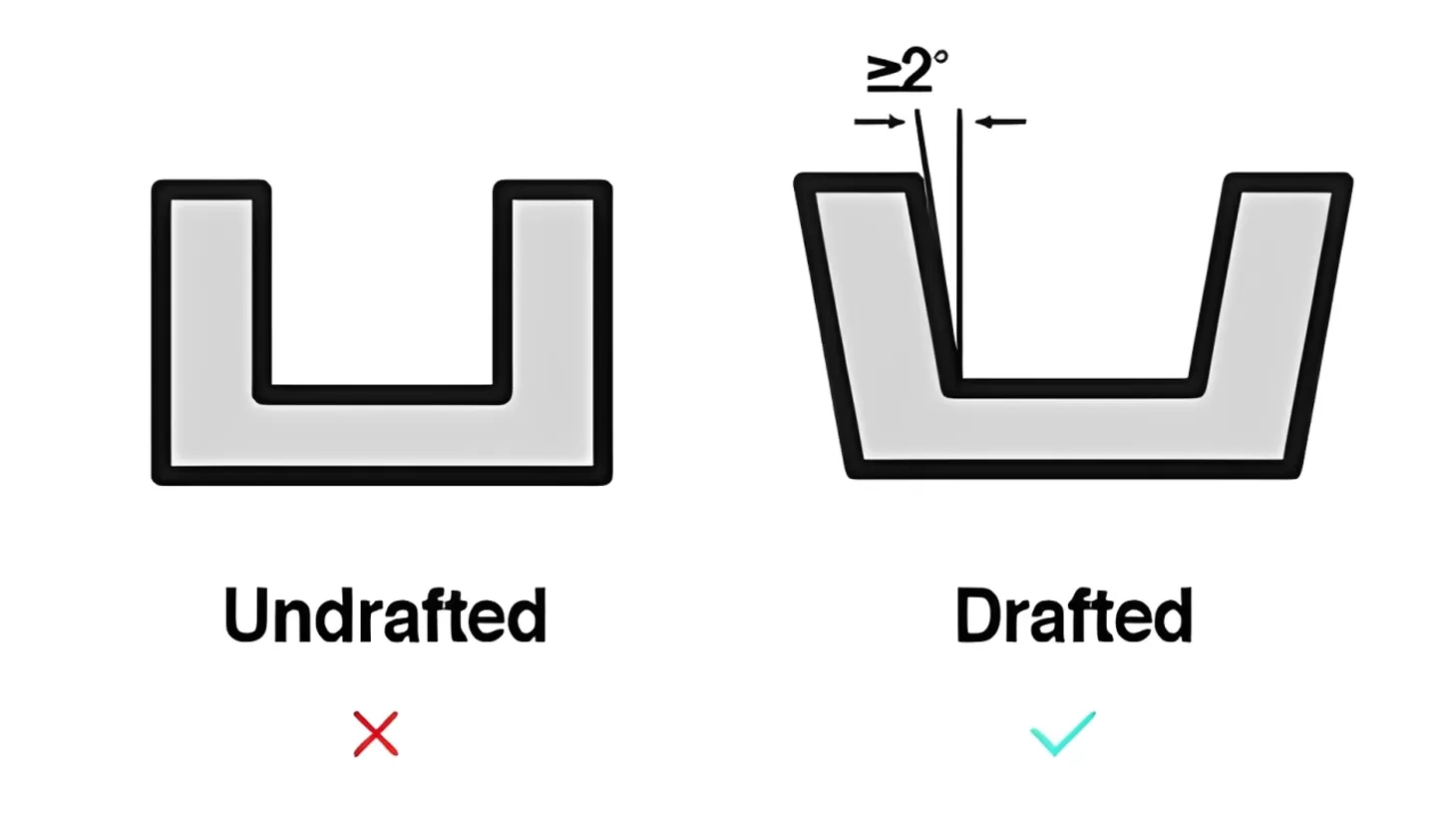
    The draft angle—the slight taper added to the walls of a plastic part—is one of the most critical, yet often overlooked, elements of injection molding design. It dictates how easily a finished component can be ejected from the mold. Getting the draft angle wrong can lead to serious issues, including part damage, slow cycles, and high tooling wear. By mastering the application of draft angles, manufacturers can dramatically improve their production line's throughput, reduce scrap rates, and extend the lifespan of costly molds.
    Draft Angle Injection Molding Best Practices: Angles for Every Part

    Why draft angles are important

    • Prevents sticking: As the plastic cools, it shrinks and grips the mold's core. A draft angle creates a slight taper that allows the part to be released easily.

    • Reduces damage: Without a draft, parts can be scratched, warped, or even broken during ejection.

    • Minimizes mold wear: A proper draft reduces friction between the part and the mold, which helps prolong the life of the tooling.

    • Prevents vacuuming: Draft angles allow air to enter the gap between the part and the mold as it opens, preventing a vacuum effect from holding the part in place.

    • Ensures quality: Adequate draft ensures the final part meets quality standards and has the intended dimensions and aesthetics.

    Factors that influence draft angle

    There is no single "magic number" for draft; the ideal angle depends on several interdependent factors:

    • Part depth: Deeper or taller parts need more draft. A general guideline is to add about one additional degree of draft for every inch of depth beyond the first two.

    • Surface texture: Rough textures require a greater draft angle to prevent the part from catching on the mold. For every thousandth of an inch of surface depth (0.001”), add 1.5 degrees of draft to the standard angle.

    • Material: Different plastics have different shrinkage rates, which affects the required draft. Some materials, like PVC, might require more draft on the inside surfaces than on the outside, while others may have specific recommendations.

    • Mold material: Aluminum molds, which are often used for lower-volume production, may require more draft than steel molds because of how they are machined.

    • Part design: The specific geometry of the part, including the height of the walls, will influence the required draft angle.

    Applying Optimal Draft Angle Injection Molding Strategies

    A common starting point for non-textured walls is 0.5°to 1° per side (meaning a total draft of 1° to 2° across the part's width). However, always aim for the largest possible draft angle that your component's functional requirements will allow. For textured parts, 3° to 5° is often required. Crucially, all ribs, bosses, and internal features must also incorporate draft to ensure they do not stick to the mold core.

    References
    Additional Injection Molding Machines
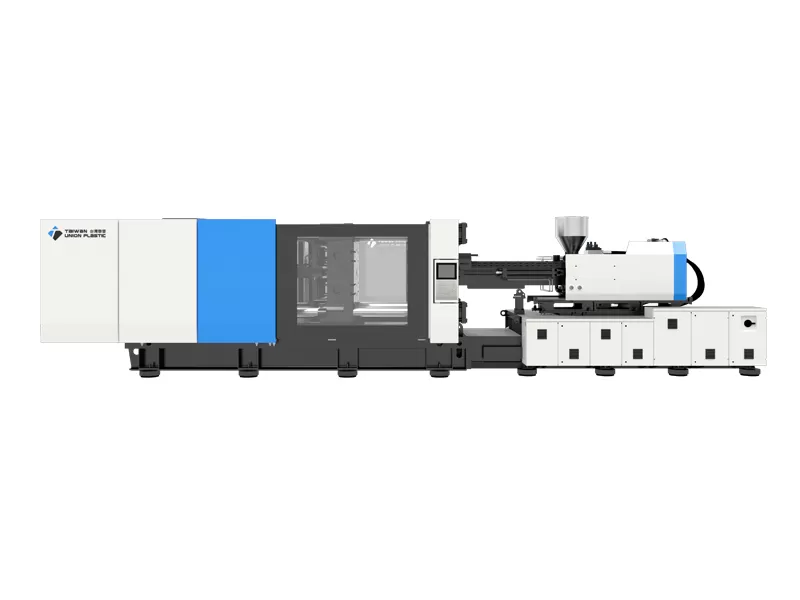
    HD-E Multi-Component Hybrid Injection Molding Machine
    Special processes and multi-component processes can be easily expanded.
    HD-E Multi-Component Hybrid Injection Molding Machine
    HD-E Multi-Component Hybrid Injection Molding Machine
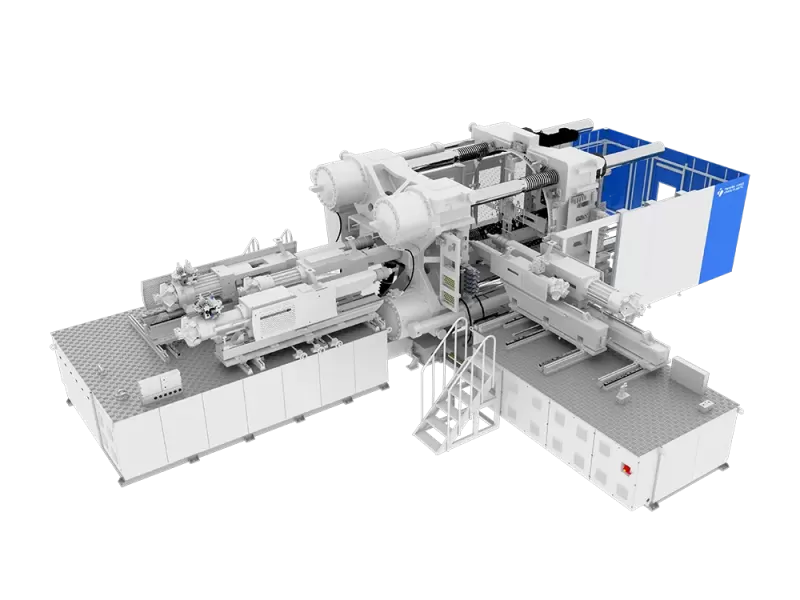
    PET Preform Special Injection Molding Machine
    Focusing on the core application requirements of PET, TUP has specially designed a complete set of PET machine solutions.
    PET Preform Special Injection Molding Machine
    PET Preform Special Injection Molding Machine
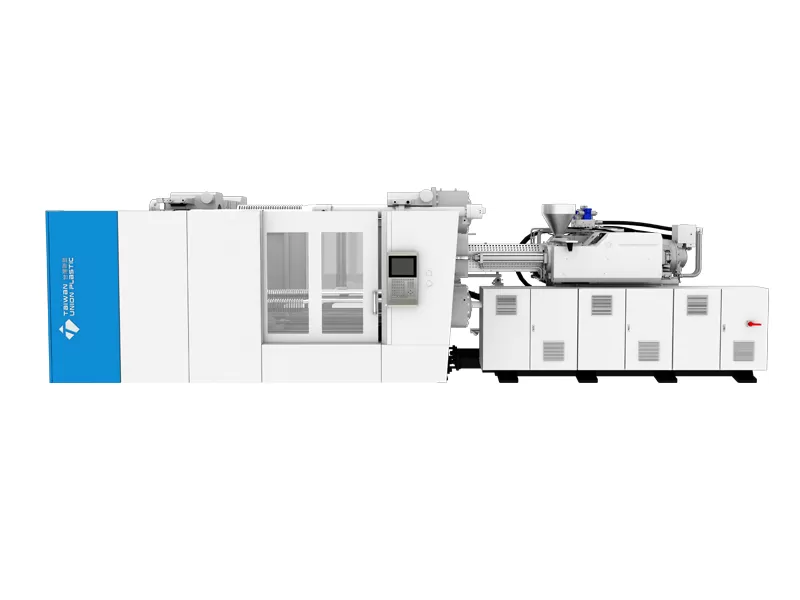
    HS-E Two-Platen Hybrid Injection Molding Machine
    It combines the advantages of a two-platen clamping structure and an electric injection unit, making it suitable for the precision molding of medium and large-sized products.
    HS-E Two-Platen Hybrid Injection Molding Machine
    HS-E Two-Platen Hybrid Injection Molding Machine
    Related Injection Molding Machines Insights
    Customer Success Story Empowers the Nail Art Industry with Multi-color Nail Tip Technology Upgrade
    Dec-11-2025
    Customer Success Story Empowers the Nail Art Industry with Multi-color Nail Tip Technology Upgrade
    Based in Laoling, Shandong Province, this plastic product manufacturer has carved out a strong foothold in the specialized segment of beauty plastic products, with a core focus on nail tip production. By partnering with TUP to deploy a professional injection molding production system, the company has driven process iteration and upgrading through technological collaboration, achieving three key breakthroughs simultaneously—energy conservation, cost reduction, and efficiency improvement—and thus enhancing its core competitiveness in the market.
    View More
    DMP Exhibition Perfectly Concludes Taiwan Liansu Injection Molding Machines Stir Up a ''Heat Wave'' Storm
    Dec-04-2024
    DMP Exhibition Perfectly Concludes Taiwan Liansu Injection Molding Machines Stir Up a ''Heat Wave'' Storm
    The 2024 DMP Greater Bay Area Industrial Expo came to a successful conclusion at the Shenzhen World Exhibition & Convention Center (Bao'an). Among nearly 2,000 exhibitors, TUP showcased its al...
    View More
    TUP Empowering Customers to Embrace the ''Plastic Instead of Steel''Trend
    Sep-09-2024
    TUP Empowering Customers to Embrace the ''Plastic Instead of Steel''Trend
    How to Reduce Production Costs? How to Simplify Complexity into One-Step Molding? How to Balance Efficiency and Quality?See how TUP Plastics unlocks more diverse interior production possibilities for ...
    View More
    333 Heting Street, Lin'an District, Hangzhou City, Zhejiang Province, China
    info@taiwanunionplastic.com +86-0571-61077708
    We use cookies on this site, including third party cookies, to delivery experiennce for you.
    Accept Cookies
    Read Privacy Policy